


Meta Faces Up to $17.1B Settlement as Social Media Industry Confronts Growing Youth-Safety Litigation

Updated: Sep 20
Meta Platforms, the parent company of Facebook and Instagram, has agreed to pay at least $12.1 billion and potentially up to $17.1 billion to resolve claims brought by 51 U.S. states and territories alleging that the company designed its social-media platforms in ways that encouraged compulsive use among children and teenagers.

The agreement requires Meta to impose new restrictions on young users, including daily usage limits, nighttime access restrictions, stronger age-assurance measures and additional parental controls.
But the Meta settlement is occurring against a much larger backdrop.
Across the world, governments are moving toward greater restrictions on children’s access to social media. Australia has already prohibited children under 16 from accessing major social-media platforms. Malaysia has begun restricting account registration for those under 16. Turkey and the United Arab Emirates have adopted measures targeting children below 15, while Britain, Spain, New Zealand, Norway, Poland, Slovenia, Sweden and Greece are considering or developing additional restrictions.
The emerging global approach varies from outright age bans to parental-consent requirements and technical controls. The common thread is increasingly clear: governments are no longer relying solely on parents and the technology companies themselves to regulate children’s exposure to social media.
Meta’s Settlement
The multistate litigation against Meta began in 2023 and centered on allegations that Facebook and Instagram incorporated features designed to maximize engagement among young users.
State attorneys general alleged that features such as algorithmically recommended content, infinite scrolling and notifications contributed to compulsive use and exposed children and teenagers to harmful online experiences.
The states also alleged that Meta violated consumer-protection laws and improperly collected information from children under 13.
Meta denied wrongdoing.
The settlement resolves the states’ claims without a judicial finding that every allegation made against Meta was proven.
Under the agreement, Meta will pay at least $12.1 billion over 10 years. An additional $5 billion is contingent on comparable settlements by other major social-media companies, bringing the potential total to approximately $17.1 billion.
The agreement requires Meta to impose a combined two-hour daily limit on children’s use of Facebook and Instagram, with mandatory interruptions designed to break up continuous scrolling. It also establishes nighttime restrictions, limits certain notifications during school hours, strengthens age verification and expands parental controls.
If Snapchat, TikTok and YouTube adopt comparable protections, the restrictions contemplated by the agreement become more stringent, including a potential reduction of the daily limit to one hour.

Australia Became the Test Case
Australia has taken the most aggressive approach to date.
On December 10, 2025, Australia became the first country to prohibit major social-media platforms from allowing children under 16 to maintain accounts.
The restrictions apply to platforms including Facebook, Instagram, TikTok and YouTube.
Companies that fail to comply can face penalties of up to A$49.5 million.
The Australian model places much of the responsibility on the technology companies rather than parents. Platforms are expected to take reasonable steps to prevent under-16 users from maintaining accounts.
The policy has also exposed one of the central difficulties confronting governments: a legal age limit is only as effective as the technology used to enforce it.
Early evidence has suggested that substantial numbers of young Australians have continued to access social-media services despite the restrictions, intensifying debate over age-verification technology and enforcement.
Britain Is Moving Toward an Under-16 Ban
The United Kingdom is also moving toward an Australia-style restriction.
British authorities plan to approve a ban on social-media access for children under 16, with implementation expected around spring 2027.
The British approach is broader than simply establishing an age threshold. Government officials are also examining technology designed to prevent children from circulating sexually explicit images and are considering requirements that could place additional responsibilities on device and platform companies.
The British government has also pressed Meta to extend the protections contained in its American settlement to British teenagers.
That could become an important precedent: whether technology companies apply stronger youth protections globally or maintain different standards depending on the country in which a user lives.
France Tried — and Hit a Constitutional Barrier
France illustrates another side of the debate.
French lawmakers approved legislation in July that would have prohibited social-media access for children under 15.
However, France’s highest court blocked the measure on August 14, concluding that the restriction infringed upon freedom of expression.
The French experience demonstrates that governments face a legal balancing act.
Protecting children from potentially harmful online environments is one objective. Restricting access to communication platforms implicates freedom of expression, privacy and other civil liberties.
Those competing interests are likely to become increasingly important as governments move from voluntary safeguards toward mandatory age restrictions.
Europe Is Considering a Broader Framework
The European Union is also examining restrictions on social-media design and children’s access.
The European Parliament has supported an EU-wide minimum age framework that would restrict access for children under 16 without parental consent and prohibit access for children younger than 13.
The European Commission is separately preparing its Digital Fairness Act, with officials signaling that the legislation could address addictive and harmful design practices.
That could move European regulation beyond simply asking, “How old is the user?”
It could instead ask, “How is the product designed to influence the user?”
That distinction could have major implications for companies whose business models depend upon personalized recommendations, notifications, autoplay, infinite scrolling and other engagement-oriented features.
Asia and the Middle East Are Joining the Movement
The restrictions are not confined to Europe and Australia.
China has implemented a “minor mode” system that uses device-level and application-specific restrictions to limit children’s screen time according to age.
Malaysia began barring users under 16 from registering social-media accounts in 2026.
Turkey passed legislation prohibiting social-media use by children under 15.
The United Arab Emirates approved a measure establishing 15 as the minimum age for social-media use and restricting children under that age from creating or using personal accounts.
New Zealand is proposing an under-16 ban, with potentially severe penalties for platforms that fail to comply. Its proposed enforcement framework would require companies to take reasonable measures to verify users’ ages.
Other governments, including those in Norway, Poland, Slovenia, Spain and Sweden, are developing their own approaches.
The result is a patchwork of regulations rather than one global standard.
The United States Is Taking a Different Route
The United States has not adopted a nationwide prohibition on social media for users under 16.
Instead, the country is developing its approach through a combination of federal legislation, state laws, lawsuits and settlements.
The Meta agreement is particularly significant because it effectively creates a set of youth-safety requirements through litigation rather than through a single federal statute.
The agreement requires Meta to change the way Facebook and Instagram operate for young users, while simultaneously creating financial incentives for other social-media companies to adopt similar safeguards.
Congress is also considering legislation that would impose additional responsibilities on social-media companies.
Meanwhile, several states have passed laws involving parental consent or restrictions on minors’ social-media use. Some of those laws have faced constitutional challenges, particularly involving freedom of speech.
The Other Social-Media Giants Are Under Pressure
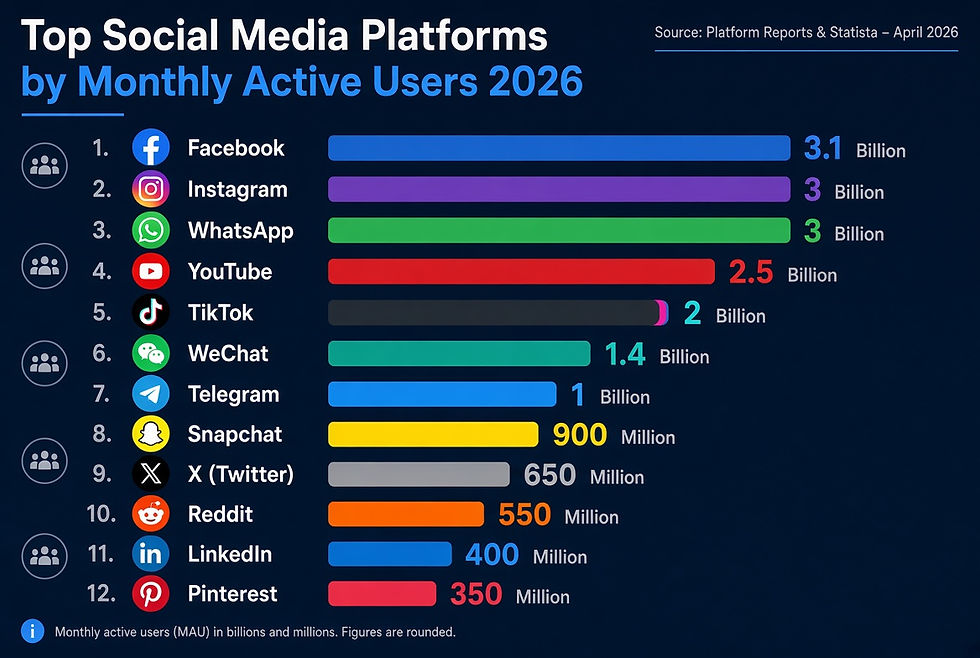
Meta’s competitors are not standing outside this fight.
TikTok, YouTube and Snapchat have all faced lawsuits or government scrutiny involving children and teenagers.
The legal claims differ.
Some involve alleged addiction or harmful platform design. Others concern children’s privacy, data collection, exposure to harmful content or alleged mental-health consequences.
TikTok, for example, has faced federal action concerning children’s privacy as well as separate litigation concerning alleged harms to young users.
YouTube and Snapchat have also faced lawsuits involving allegations that their platforms can contribute to problematic or compulsive use among children.
Meta’s settlement is significant to those companies because its financial structure effectively links part of Meta’s potential payment to whether competitors adopt comparable safeguards.
This creates a potentially unusual situation in which one company’s settlement could help establish expectations for an entire industry.
The Global Debate Is Moving Beyond “Screen Time”
For years, the conversation surrounding children and social media largely focused on parents.
Parents were encouraged to monitor screen time, establish household rules and use parental controls.
The emerging regulatory model is different.
Governments are increasingly asking technology companies to take responsibility for the products themselves.
That includes questions such as:
Should children under a certain age be allowed to maintain social-media accounts?
Should platforms be required to verify users’ ages?
Should algorithms be allowed to personalize content for minors?
Should infinite scrolling and autoplay be restricted?
Should push notifications be disabled during school and sleeping hours?
Should companies be required to provide non-personalized feeds?
Should parents be given greater control over their children’s accounts?
Should companies face significant financial penalties when they fail to protect minors?
These questions reach directly into the architecture of social-media platforms.
Age Verification Creates a New Privacy Debate
There is, however, a second problem.
The more governments require platforms to verify age, the more information companies may need to determine whether a user is a child.
Proposed and existing systems can involve existing account information, facial-analysis technology, digital identity systems or other forms of age assurance.
That creates an uncomfortable trade-off.
Governments want platforms to know who is under 13, 15 or 16.
Privacy advocates, meanwhile, have reason to ask how that information will be collected, stored, processed and protected.
A system designed to protect children from excessive data collection could potentially require companies to collect additional information about users.
The technology may solve one problem while creating another.
A Worldwide Regulatory Experiment
The world is now effectively conducting a large-scale experiment.
Australia is testing whether a nationwide under-16 prohibition can be enforced.
Europe is examining whether platform design itself should become a regulatory target.
China is using device and application controls.
The United Kingdom is moving toward stronger age restrictions.
Several governments are considering parental-consent models.
The United States is testing whether litigation and negotiated settlements can force companies to change their products.
None of these approaches has yet established a definitive answer to the central question: what works?
A ban may reduce access but prove difficult to enforce.
Age verification may improve enforcement but raise privacy concerns.
Parental controls may give families greater authority but place the burden back on parents.
Design restrictions may address the mechanisms that encourage prolonged engagement but could also affect adults and the fundamental economics of the platforms.
What This Means for Meta
For Meta, the settlement may therefore represent more than the resolution of a major lawsuit.
It could become an important benchmark for how governments evaluate social-media companies.
The company has agreed to restrictions that directly affect engagement — the economic engine at the heart of Facebook and Instagram.
At the same time, Meta has not agreed to eliminate personalized recommendations or targeted advertising entirely. Reuters reported that the settlement does not require a fundamental overhaul of Meta’s business model.
That distinction is important.
The settlement changes how Meta serves young users, but it does not fundamentally eliminate the engagement-driven architecture that powers its broader business.
The Question Now Moves to the Rest of the Industry
The next major development may not come from Meta at all.
It may come from TikTok, YouTube or Snapchat.
If those companies accept comparable restrictions, the Meta settlement could help establish a new baseline for youth protections across major social-media platforms.
If they refuse, the industry could enter another round of litigation in which each company fights its own battle over similar allegations.
Meanwhile, governments outside the United States are already moving.
Australia has established an under-16 prohibition. Britain is moving toward one. Turkey and the UAE have adopted age restrictions. European governments are considering additional measures. China has established a separate minor-mode framework.
The direction of travel is unmistakable even though the destination remains uncertain.
The Larger Question
The central issue is no longer simply whether children should use social media.
Governments around the world are increasingly asking whether children should be permitted to enter an environment engineered to compete aggressively for their attention in the first place.
That question places technology companies, parents, courts and governments on unfamiliar ground.
For decades, the internet developed largely under the assumption that users — and particularly parents — would determine how digital services were used.
That assumption is changing.
The emerging regulatory philosophy is that when the user is a child, the platform may have an affirmative responsibility to protect the user from the consequences of the product’s own design.
Meta’s potential $17.1 billion settlement is therefore only one piece of a much larger story.
The money is substantial.
The lawsuits are significant.
But the more consequential development may be the regulatory idea taking shape around them:
The world’s governments are beginning to treat children’s access to social media not simply as a matter of parental choice, but as a matter of public policy.


Comments